
U.S. Budget Deficit Reaches Five-Year Monthly High as Medicare Costs Rise
 Cue Writer
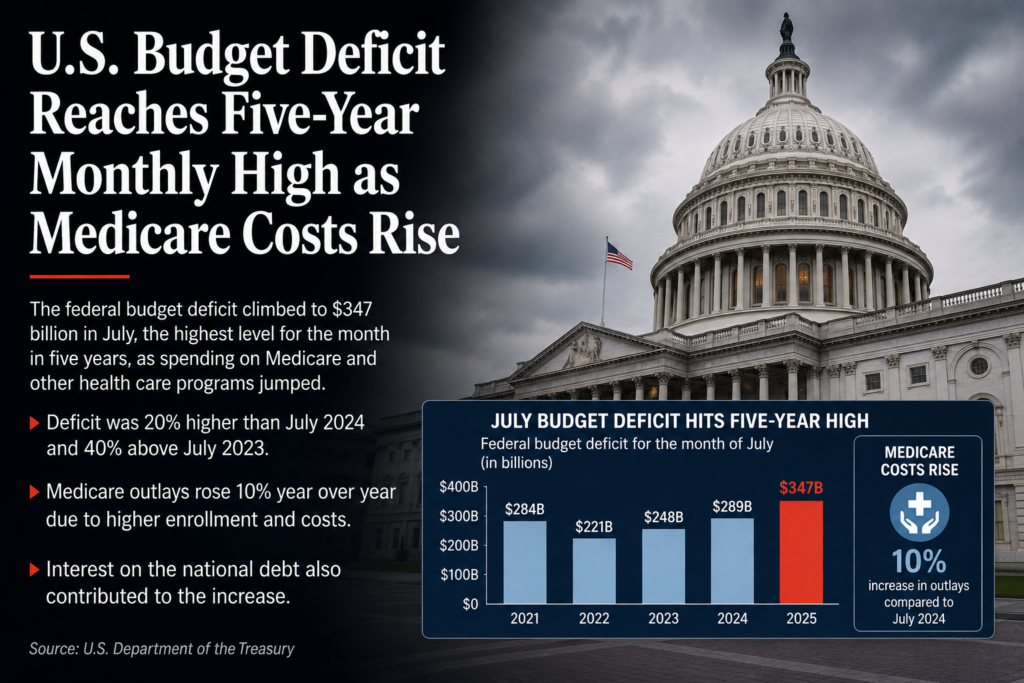

The U.S. budget deficit totaled $432.3 billion in July, the largest monthly shortfall since March 2021, as Medicare outlays increased and interest costs on federal debt remained substantial, according to the Treasury Department figures reported by CNBC.
The July gap was about 48% higher than a year earlier. Through the first 10 months of the fiscal year, the cumulative deficit approached $1.8 trillion, exceeding the total recorded during the same period in fiscal 2025, CNBC reported.
Medicare spending reached $174 billion in July, up from $103 billion in June, making it the month’s largest federal expense. Social Security spending was $141 billion, while net interest costs were $104 billion.
Debt-service costs remain a central part of the fiscal picture. Treasury data showed the government had paid $1.17 trillion in interest during the fiscal year to date on a national debt of about $39.9 trillion, according to CNBC. Higher borrowing costs can influence federal budget choices and the broader interest-rate environment watched by households, businesses and investors.
The figures underscore how entitlement spending and financing costs are shaping the nation’s finances. For consumers in the U.S. Virgin Islands and elsewhere, federal fiscal conditions can matter through their potential effect on rates, investment markets and government policy.
Source: CNBC